
Every retailer knows the frustration: a cart pulls hard to the left, a child seat buckle snaps, or a caster seizes up mid-aisle during the Saturday rush. These are not minor inconveniences. Stores can lose as much as 10% of their cart fleets per year due to neglect, and in a supply environment where tariffs on imported steel and aluminum doubled from 25% to 50% in June 2025, pushing steel mill products up over 20% and aluminum mill shapes up 33% year-over-year, finding and holding a reliable shopping cart parts supply has become a genuine procurement challenge.
The good news is that a structured approach to sourcing, supplier vetting, and parts inventory turns a reactive headache into a controlled, predictable maintenance program. This guide walks you through exactly how to build that foundation in 2026.

Key Takeaways
- Fleet attrition is measurable and preventable: The Peggs Company’s fleet research shows stores lose up to 10% of their cart fleets annually from neglect, audit your fleet quarterly and set a target attrition rate of 3% or lower.
- Parts cost a fraction of full replacement: According to Carts and Parts’ cost comparison, a new cart runs $75 to $250 while a replacement wheel costs $5 to $15, therefore, a functioning parts supply is your lowest-cost lever for fleet longevity.
- Tariffs are reshaping sourcing maps: BCG estimates the doubling of steel and aluminum tariffs will push total tariff costs to $50 billion, therefore, locking in domestic or nearshore suppliers now protects your parts budget from further volatility.
- Proactive wheel replacement cuts costs dramatically: Research cited by Suportrevup indicates retailers that proactively replace worn cart wheels reduce overall cart replacement costs by up to 60% annually, therefore, set inspection cycles before wheels fail, not after.
Multi-supplier sourcing is the 2026 standard: McKinsey research shows that supply chain disruptions lasting longer than a month now occur every 3.7 years on average and can cost businesses up to 45% of a year’s profit over the course of a decade.7 years on average and can erase nearly 42% of one year’s profits, therefore, never depend on a single parts vendor.
Quick-Start Prioritization Framework
| Strategy | Best For | Effort Level | Time to Results |
|---|---|---|---|
| Fleet audit and parts mapping | All store types and sizes | Low | Days |
| Standardize wheel and caster specs | Multi-location chains | Low | 1-2 weeks |
| Qualify 2-3 approved parts suppliers | Any store facing tariff exposure | Medium | 2-4 weeks |
| Build a safety stock buffer on casters and wheels | High-traffic stores | Medium | 2-4 weeks |
| Negotiate a preventive maintenance contract | Large chains, franchises | High | 1-3 months |
| Upgrade fleet with built-to-last carts | Stores with aging fleets | High | 3-6 months |
Start here if you’re:
- A single-location grocer: Run a fleet audit first, then qualify one primary and one backup supplier for wheels and casters.
- A multi-location retailer: Standardize specs across locations first, Bralad’s retail chain maintenance guide confirms that using fewer part variations makes bulk purchasing and staff training significantly more manageable.
- A procurement manager under budget pressure: Prioritize proactive wheel replacement over full cart replacement to capture the up-to-60% cost reduction noted above.
Why Your Shopping Cart Parts Supply Is Under More Pressure Than Ever
Most procurement managers think about shopping cart parts as a minor maintenance line item. In my experience, that perception changes fast the first time a supplier quotes a 30-day backorder on casters and a third of your fleet is sitting idle.
The Tariff Impact on Cart Components
On June 4, 2025, the U.S. federal government raised tariffs on imported steel and aluminum from 25% to 50% under a presidential proclamation. federal government raised tariffs on imported steel and aluminum from 25% to 50%, these tariffs have had a financial ripple effect on the critical industries that depend on these materials. Shopping cart frames, axles, and wheel hardware are all derivative steel products. This means procurement teams sourcing parts from overseas manufacturers are absorbing real cost increases, not theoretical ones.
The U.S. relies on imports for about 50% of its aluminum needs and 25% of its steel supply, so even domestic suppliers are not fully insulated. The action here is clear: if you have not renegotiated your parts contracts since mid-2025, request updated pricing immediately and lock in multi-year rates where suppliers will agree.
Smart Cart Technology Is Raising the Stakes
Tariffs on imported IoT sensors and printed circuit board assemblies are projected to raise production expenses by approximately 4-6%, directly affecting essential cart components like weight sensors, cameras, and connectivity modules. If your store is rolling out or evaluating smart cart technology, factor this surcharge into your total cost of ownership before signing deployment contracts.
Know Your Parts: A Practical Taxonomy for Retail Buyers
Before you can source reliably, you need to know exactly what you are buying. In my experience, stores that standardize their parts vocabulary cut sourcing errors and misfits by half.
The High-Turnover Components
Many shopping carts can be improved with replacement parts such as seat belts, wheels, casters, handles, bumpers, and other common components. Of these, wheels and casters are the highest-turnover items in any active fleet.
Quality shopping cart casters are tested and rated for millions of cycles, and a well-made polyurethane or polyolefin wheel on precision bearings can last 3-5 years in daily retail grocery service before needing replacement. That lifespan drops sharply in stores with rough asphalt lots or frequent cart-washing with harsh chemicals. If your casters are failing inside 18 months, material specification is the first thing to examine.
The industry-standard size for US shopping carts is 5 inches with a 5/16-inch axle and 1-1/4-inch tread width. Knowing this number before you call a supplier saves significant time and prevents costly mismatches.
Matching Material to Environment
Polyurethane lasts longer and handles flat-spotting better than rubber, but rubber is quieter on hard floors. For 24-hour stores or locations with heavy outdoor cart traffic, choose a wheel rated 250 lb capacity or higher per wheel.
The primary failure modes are flat-spotting from heavy static loads during overnight storage, bearing wear, and corrosion of the frame and axle from outdoor exposure. This means your parts selection has to match your operating environment specifically, a coastal store with salt air exposure needs zinc-plated frames, while an indoor-only location can prioritize quieter tread compounds.
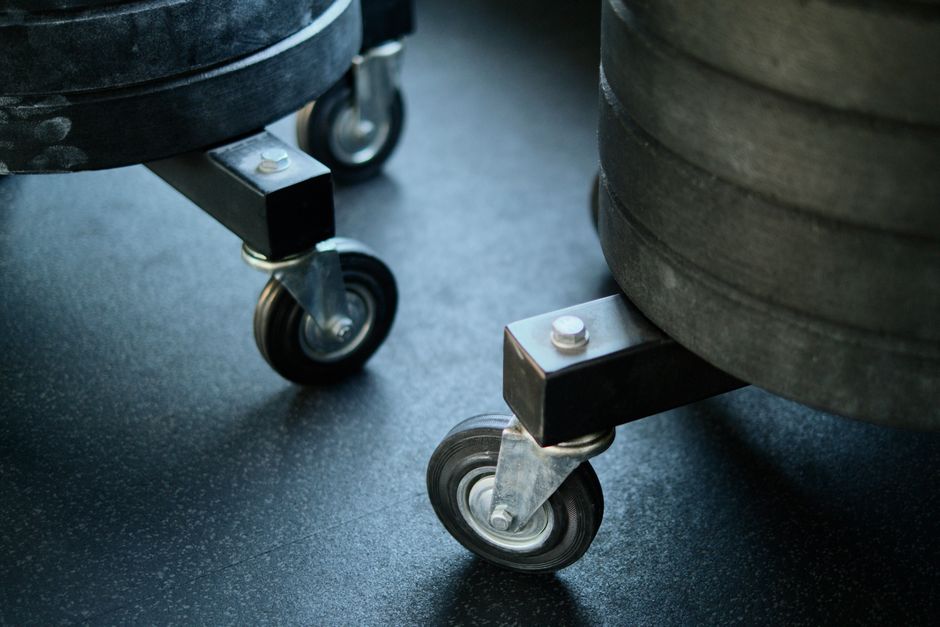 Photo by
 How to Vet and Qualify a Shopping Cart Parts Supplier
Sourcing from the wrong vendor is worse than sourcing from no vendor at all. Late deliveries, wrong specifications, and non-compliant hardware can take carts out of service for longer than the original failure.
Build a Four-Criteria Scorecard
An effective supplier vetting process follows four steps: identify criteria, outline goals, and determine ideal attributes in essential categories, such as safety, quality, operations, customer service, and communication. Applied to cart parts, this translates to:
- Parts specification accuracy, do their SKUs match your OEM cross-references?
- Lead time consistency, what is their average ship time versus quoted ship time?
- Inventory depth, can they fill a 200-unit caster order without backordering?
- Tariff transparency, how do they handle duty cost pass-through?
Document Before You Commit
Research and collect documentation, review safety statistics, certificates of insurance, W8/W9, and audit reports, these illustrate a vendor’s competency, capacity, commitment, and consistency. For parts suppliers specifically, also request technical data sheets for any wheel or caster product before ordering at volume. A mismatch in load rating or axle diameter discovered after 500 units arrive is an expensive problem.
Keep Two Suppliers Active at All Times
Relying on a single supplier or a single region can create massive bottlenecks when disruption hits. I’ve found that maintaining two active, approved vendors, with separate geographic sourcing, is the minimum viable setup for any store managing more than 50 carts. Companies now work with 3 to 5 vendors instead of relying on one source, meaning when a supplier cannot deliver, you have backups ready.
Building a Safety Stock Strategy for Cart Parts
In 2026, the lean-inventory mindset that dominated pre-pandemic procurement is giving way to something smarter. Safety stockpiling reached its highest level since January 2023, reflecting a growing trend among manufacturers to build inventory buffers against anticipated price increases and supply constraints.
What to Stock and How Much
The key lies in selectivity – identifying which materials, components, or finished goods warrant buffer inventory based on their criticality, supply risk, and impact if unavailable. For a retail cart fleet, the answer is straightforward: casters and wheels first, then seat belts and handles, then specialty hardware.
A practical starting point for a 100-cart fleet: keep 20 spare casters (one full set per 25 carts), 10 spare handles, 15 seat belt assemblies, and a hardware kit with fasteners and axle nuts. This is not a large capital commitment relative to the cost of taking 15 carts out of rotation for three weeks while waiting on a backorder.
Align Stock Levels with Inspection Cycles
Regularly-scheduled preventive maintenance extends the useful life of carts and can substantially reduce the number of out-of-service carts at your store. OMNI recommends preventive shopping cart maintenance services minimally once or twice a year, though a customized maintenance program based on specific needs is available. Use those inspection dates as your parts replenishment trigger. Every time technicians inspect your fleet, check safety stock levels and reorder before counts fall below minimum.
 Photo by Alexander Isreb on Pexels
Preventive Maintenance vs. Reactive Repair: Where the Real Costs Hide
This is where most retailers leave money on the table. Reactive maintenance usually costs more than preventive maintenance, when a wheel fails unexpectedly, employees must locate replacement parts, remove the cart from service, and possibly request urgent repair support. That labor time, plus expedited shipping premiums on emergency parts orders, consistently outpaces the cost of scheduled inspection and proactive replacement.
The Financial Case for Scheduled Programs
According to the National Retail Maintenance Association, retailers that proactively replace worn cart wheels reduce cart replacement costs by up to 60% annually and experience 30% fewer customer complaints related to cart performance. If your store spends $8,000 per year on cart replacements today, a proactive parts program could theoretically bring that to under $3,500. Put the savings back into a safety stock fund and the program essentially finances itself.
Customers may not consciously think about shopping cart maintenance, but they notice when something feels wrong, a noisy cart, a missing belt, a sticky wheel, or a rusty frame can send the wrong message before the customer ever reaches the first aisle. The cart is a first impression. Procurement decisions about parts supply directly affect how shoppers perceive your store.
Standardize Specs Across Your Fleet
Large retail chains often experience unnecessary maintenance complications because different stores use different cart models, wheel sizes, or caster assemblies, standardizing approved wheel specifications can simplify the replacement process significantly. This is especially important for multi-location operators: a single approved parts list across all stores enables bulk purchasing, unified training, and centralized inventory, all of which reduce per-unit parts cost.
Choosing a Full-Service Cart Partner vs. Managing Parts In-House
Some retailers prefer to own every aspect of cart maintenance. Others want a single call to handle everything. Both approaches work, but they carry different cost and risk profiles.
In-House Maintenance
Pros:
- Faster response time for visible failures on the floor
- Lower per-incident cost when parts are stocked and staff are trained
- Direct control over parts specification and supplier relationships
Cons:
- Requires staff training and ongoing knowledge retention
- Safety and compliance responsibility falls entirely on the store
- Parts sourcing, vetting, and inventory management require dedicated attention
Full-Service Contract Maintenance
Pros:
- Single vendor accountable for fleet condition
- Includes scheduled inspection, parts supply, and emergency response
- Transfers parts sourcing complexity to the provider
Cons:
- Higher total cost if cart volume is low
- Less flexibility to specify preferred parts brands
- Contract terms may not match your specific inspection frequency needs
A professional shopping cart maintenance provider can perform fleet inspections, wheel replacements, caster repairs, pressure washing, safety checks, and cart retrieval services, before choosing a provider, retailers should review service coverage, response times, replacement-part quality, technician experience, reporting capabilities, and support for multiple locations.
For retailers who want both the confidence of a managed program and the flexibility to choose premium cart equipment, Instore Products offers a full-service model that covers new carts, maintenance, and cart refurbishment under one relationship. When it comes to the first and last item in your customer’s hands, it is the Instore goal to maximize the shopping experience for everyone involved, through high quality products, around-the-clock cart management, and retail expertise, Instore Products has proven to be the ultimate retail solution for any specific need. Procurement managers and grocers who want to see the Instore difference firsthand are encouraged to request a free consultation and quote directly through instorecorp.com.
Frequently Asked Questions
How often should shopping cart wheels be replaced?
Quality shopping cart casters are tested and rated for millions of cycles, and a well-made polyurethane or polyolefin wheel on precision bearings can last 3-5 years in daily retail grocery service before needing replacement. However, high-traffic stores with outdoor parking lots, cart-wash systems, or rough surfaces should inspect wheels at least twice per year and replace on condition rather than on a fixed schedule.
What is the cost difference between replacing parts and buying new carts?
On average, a new shopping cart can cost between $75 to $250 depending on its features and material, in contrast, replacing a wheel might cost $5 to $15, and a handle might be $10 to $20. For carts with structural frames still in good condition, parts replacement is almost always the more cost-effective first response.
How are 2026 tariffs affecting shopping cart parts pricing?
As of January 7, 2026, U.S. steel and aluminum tariffs remain unchanged at 50% under Section 232, including the expanded coverage of derivative products added in 2025. This directly affects zinc-plated frames, axle hardware, and any cart component with significant steel or aluminum content. Retailers should request tariff surcharge policies from all active suppliers and lock in pricing where possible.
How many suppliers should I qualify for cart parts?
The minimum recommended is two active, tested suppliers with different geographic sourcing. Companies now work with 3 to 5 vendors instead of relying on one source, when a supplier cannot deliver, you have backups ready to collect your parts from with no need to scramble at the last minute. For multi-location chains, three qualified suppliers is a practical resilience target.
What safety or compliance standards apply to shopping cart maintenance?
Shopping carts with broken or malfunctioning parts can lead to accidents or injuries, potentially opening stores to legal liabilities and lawsuits, regular maintenance ensures equipment meets ASTM standards. Ask any maintenance provider or parts supplier to confirm ASTM compliance for structural components, particularly child seat hardware and frame fasteners.
The Bottom Line
A reliable shopping cart parts supply in 2026 is not simply a matter of finding the cheapest caster on a B2B platform. It requires knowing your specifications, qualifying multiple suppliers, building a safety stock buffer calibrated to your fleet size and inspection cycles, and deciding whether in-house maintenance or a full-service contract better matches your operational footprint. The tariff environment makes domestic and nearshore supplier relationships more valuable than they have been in years.
If you manage or procure for a retail or grocery operation and you are ready to take a more structured approach to your cart fleet, consider reaching out to Instore Products for a free consultation. Founded in 1990, Instore Products has become a leader in designing and manufacturing unique products and systems that support the constantly changing needs of the global grocery industry, and the team is well-positioned to help you evaluate whether a new cart model, a refurbishment program, or a managed maintenance arrangement makes the most sense for your stores.